
You may never have heard of it, but homocysteine is an amino acid that plays a vital role in your body’s cellular processes.
It’s a natural byproduct of protein metabolism, and your body is supposed to quickly break it down into other useful compounds.
When that breakdown process fails, homocysteine levels in the blood begin to climb, which can silently increase the risk for serious health issues, including cardiovascular disease, stroke, and cognitive decline.
In this post, we will explore 5 ways to reduce homocysteine levels, starting with what causes elevated levels of homocysteine.
Let’s dive in!
What Causes Elevated Homocysteine Levels?
Elevated homocysteine, a condition known as hyperhomocysteinemia, is almost always a sign that the body’s essential metabolic pathways, specifically the methylation cycle and the transsulfuration pathway, are struggling to convert the amino acid into something harmless.
The primary factors disrupting this conversion are:
- B Vitamin Deficiencies: This is the most common cause. The breakdown of homocysteine relies entirely on the presence of three key B vitamins, acting as cofactors (helpers) for the necessary enzymes:
- Folate (Vitamin B9): Necessary for the conversion of homocysteine back into methionine.
- Vitamin B12 (Cobalamin): Also required for the remethylation cycle.
- Vitamin B6 (Pyridoxine): Essential for converting homocysteine into cysteine.
- Genetic Polymorphisms (MTHFR Mutation): A significant number of people have genetic variations in the Methylenetetrahydrofolate Reductase (MTHFR) enzyme. This enzyme is crucial for converting the inactive form of folate (folic acid) into the active form the body can actually use. A sluggish MTHFR enzyme can prevent the body from getting the active B vitamins needed to process homocysteine, even if dietary intake seems adequate.
- Lifestyle and Health Factors: Certain chronic conditions and lifestyle habits can contribute to high levels, including: chronic kidney disease, hypothyroidism, chronic inflammation, excessive alcohol intake, and smoking.
5 Ways to Reduce Homocysteine Levels
1. Methylated B Vitamin Supplement
Since deficiencies in B vitamins (Folate, B12, and B6) are the primary culprits, a targeted supplement is the most effective first line of defense.
For optimal results, look for a Methylated B-Complex which provides the active forms of the vitamins:
- L-Methylfolate (instead of synthetic Folic Acid)
- Methylcobalamin (instead of Cyanocobalamin)
- Pyridoxal-5-Phosphate (P-5-P) (the active form of B6)
These methylated forms bypass the need for the MTHFR enzyme to convert them, ensuring that the necessary cofactors are immediately available to break down homocysteine.
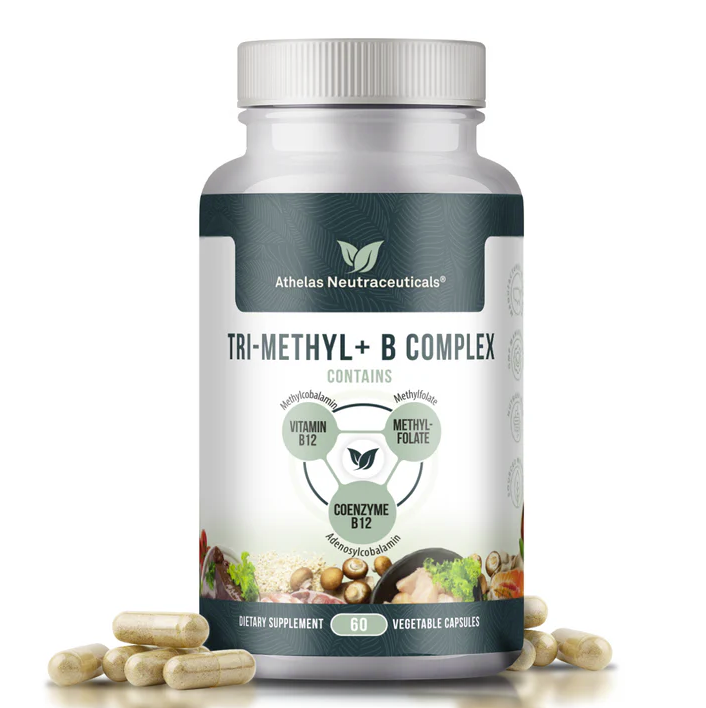
Out of all of the Methylated B Vitamins I’ve tried, my personal favorite is Athelas’ Tri-Methyl B Complex.
Athelas’ Tri-Methyl+ B Complex is highly effective for reducing elevated homocysteine because it provides the essential B vitamins in their active, methylated forms, such as Methylfolate and two forms of B12 (Methylcobalamin and Adenosylcobalamin).
This active form delivery bypasses the common MTHFR genetic conversion barrier, ensuring the body has immediate access to the necessary cofactors to break down homocysteine.
The inclusion of a full spectrum of active B vitamins, including P-5-P (active B6), also guarantees comprehensive support for the entire methylation and transsulfuration pathway as well.
Simply take one capsule per day, and you’re good to go!
2. Increase Betaine Anhydrous (TMG) Intake
Betaine Anhydrous, also known as Trimethylglycine (TMG), is a powerful methyl donor that provides an alternate pathway for reducing homocysteine.
TMG is involved in the remethylation pathway, where it directly converts homocysteine back into methionine, effectively removing it from the blood.
TMG is naturally found in foods like beets, spinach, and whole grains, but it is often taken as a supplement alongside B vitamins for a comprehensive reduction strategy, particularly for those with stubbornly high levels.
3. Eat Folate-Rich Leafy Greens and Legumes
While supplementation is often necessary for a significant reduction, diet provides the foundational support.
Folate (the natural form of Vitamin B9) is abundant in many plant foods.
Prioritize consumption of foods that are naturally high in folate, which include:
- Dark Leafy Greens: Spinach, kale, Swiss chard
- Legumes: Lentils, black beans, chickpeas
- Cruciferous Vegetables: Broccoli and Brussels sprouts
- Avocados
Consuming these foods regularly ensures a steady, bioavailable supply of the natural B vitamin cofactors needed for the homocysteine conversion process.
4. Limit Caffeine and Alcohol Consumption
Both high caffeine and alcohol intake can interfere with the body’s ability to regulate homocysteine.
Excessive alcohol consumption is known to negatively impact the absorption and storage of B vitamins, especially folate and B12, effectively reducing the cofactors needed for the conversion process.
Some studies also suggest that high daily coffee consumption (four or more cups) may contribute to elevated homocysteine levels.
Reducing intake of both substances can help preserve your B vitamin stores and support the body’s natural detoxification pathways.
5. Manage Chronic Stress
Chronic stress triggers the release of hormones like cortisol, which creates a state of chronic, low-grade inflammation throughout the body.
This systemic inflammation can interfere with the efficiency of key metabolic pathways, including the methylation cycle, indirectly affecting homocysteine levels.
Incorporating daily stress management techniques, such as meditation, deep-breathing exercises, or consistent physical activity, can help lower the body’s overall inflammatory burden, thereby improving the efficiency of the pathways responsible for clearing homocysteine.
Lowering Homocysteine Levels
Homocysteine is a powerful indicator of your nutritional status and cardiovascular risk.
By taking the proactive step of using a methylated B vitamin supplement and supporting that foundation with targeted diet and lifestyle changes, you can effectively lower your levels and invest in a healthier brain and heart for years to come.
FInally, as always, please discuss your specific homocysteine levels and supplementation plans with a qualified healthcare professional.
Thank you for reading!
Affiliate Disclosure
Some of the links on this site are affiliate links. This means that if you click on the link and purchase the item, we may receive an affiliate commission at no extra cost to you. I only recommend products or services that I believe will add value to my readers, however some (not all) do pay us to be on this blog. Your support and theirs helps keep this blog running, and I genuinely appreciate it.
Medical Disclaimer
The information provided on this website is for educational purposes only and is not intended as medical advice. This blog or the writer is not a licensed healthcare professional, and the content should not be used as a substitute for professional medical diagnosis, treatment, or advice. Always consult with your physician or other qualified healthcare provider before starting any new treatment or making any changes to your healthcare routine.
